
Regeneration is not a single event. It is a staged biological process — and the biggest mistake in recovery research is treating it like one.
Two distinct protocol archetypes have emerged in peptide stack design, built on fundamentally different assumptions about what the tissue needs at a given moment. Getting this distinction right matters more than the compounds themselves.
The Core Difference
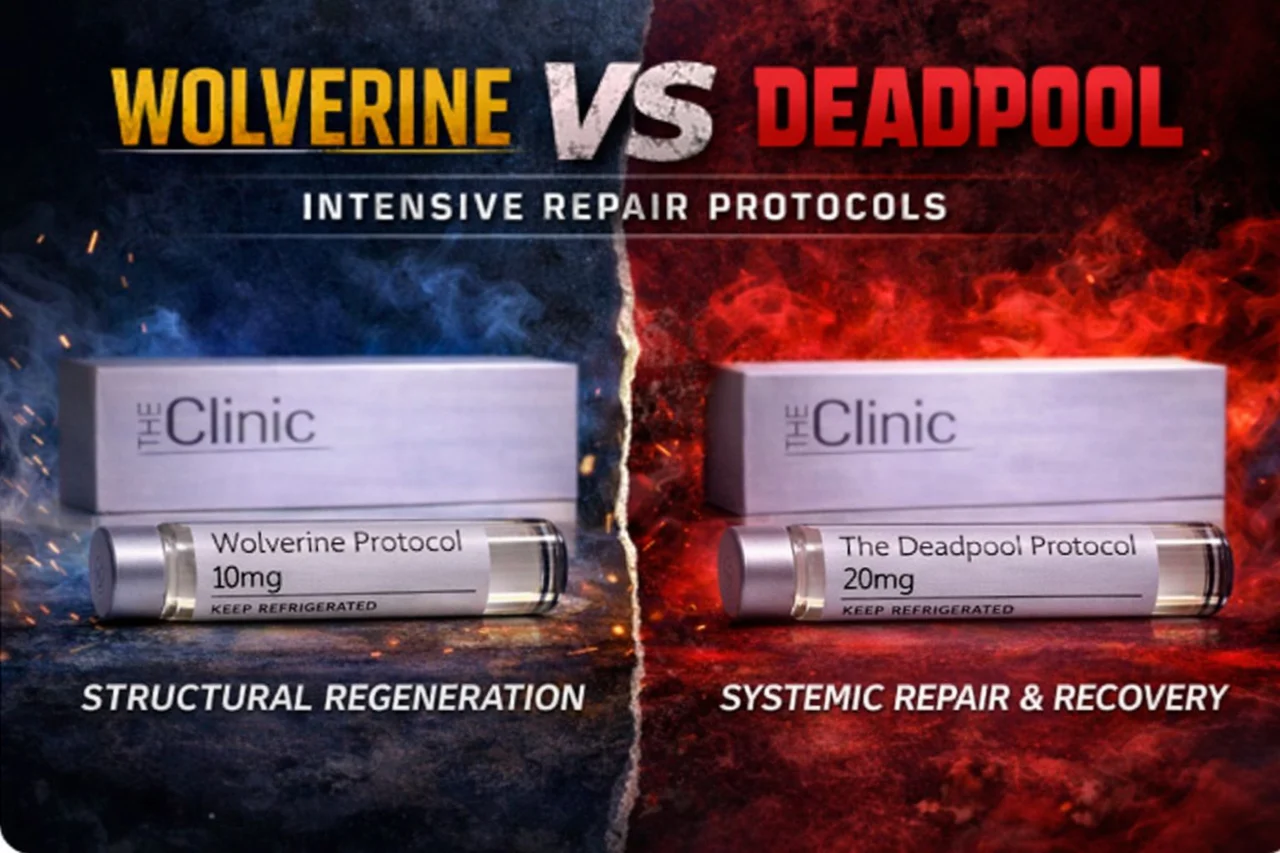
The Wolverine stack is a structural load protocol. It is designed for connective tissue reinforcement under mechanical stress — tendon densification, ligament resilience, and collagen matrix strengthening during active training cycles.
It works best when:
- Inflammation is controlled and stable
- Tissue integrity is intact
- The goal is adaptation under load, not recovery from damage
The Deadpool stack is an environmental control protocol. It does not simply stimulate repair — it regulates the conditions in which repair occurs. It includes KPV, an anti-inflammatory tripeptide, to modulate cytokine activity and reduce the reactive tissue environment that stalls recovery.
It works best when:
- Chronic or acute inflammation is present
- Recovery from surgery, injury, or overuse is the primary objective
- Tissue is reactive, irritated, or under-responding to other compounds
Why Sequence Matters
Deploying a structural stimulation protocol into a highly inflammatory environment can accelerate the wrong processes — driving fibrosis, increasing scar tissue density, or creating maladaptive remodelling.
The research-supported sequence is:
- Deadpool phase first: Stabilise the inflammatory environment, regulate signalling cascades, and prepare tissue for directed repair
- Wolverine phase second: Introduce structural stimulation once the terrain supports organised regeneration
Running them in reverse — or running only one — misses half the equation.
The Underlying Principle
Effective regeneration research does not ask "what can I stimulate?" It asks "what does this tissue need right now?"
Structure without stability produces scar tissue. Stability without structure produces stagnation. The protocols are not competing — they are sequential.
*For laboratory and educational research use only. Not approved for human or veterinary use.*