 The Peptide Clinic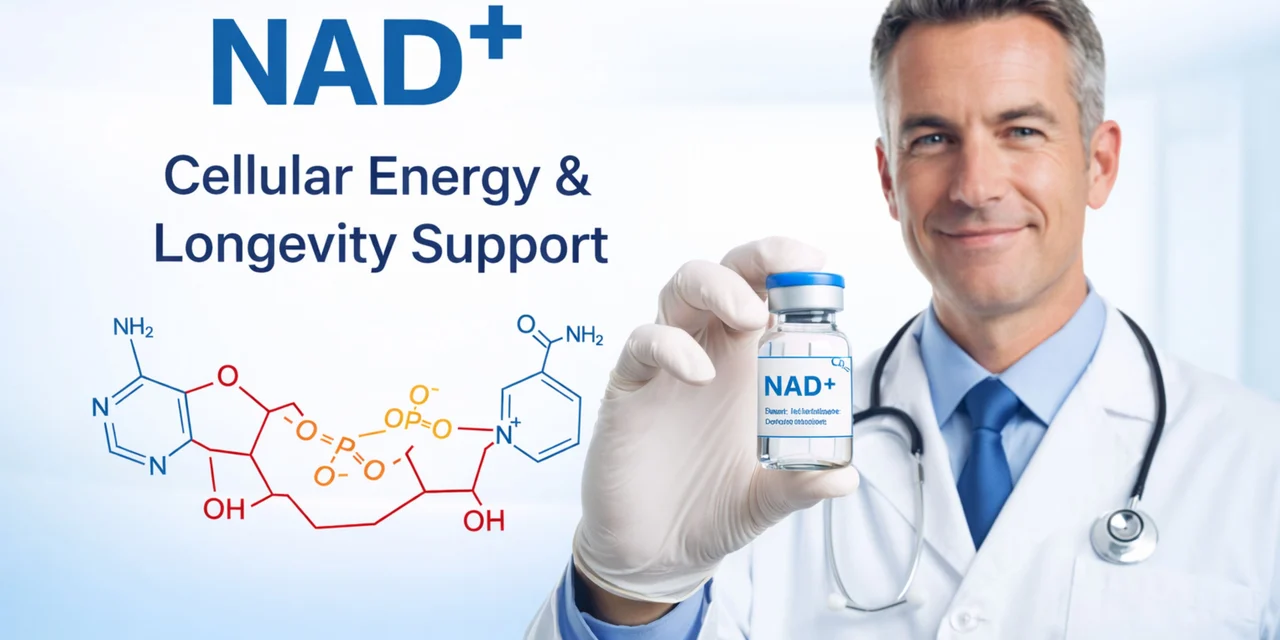
Every cell in your body runs on NAD+.
Not as a fuel. As a control signal. NAD+ (nicotinamide adenine dinucleotide) is a coenzyme that sits at the intersection of energy metabolism, DNA repair, and cellular stress response. Without it, the biochemical machinery that keeps cells functional begins to slow, misfire, and fail.
The problem: NAD+ availability declines sharply with age, chronic stress, and metabolic dysregulation. And the downstream effects are not subtle.
What NAD+ Actually Does
Three distinct research areas dominate NAD+ literature:
1. ATP production NAD+ is a critical electron carrier in glycolysis and the Krebs cycle, the core pathways through which cells generate adenosine triphosphate (ATP). Reduced NAD+ availability directly impairs cellular energy output, contributing to fatigue, reduced exercise tolerance, and mitochondrial dysfunction.
2. DNA repair via PARP activation PARP enzymes (poly ADP-ribose polymerases) consume NAD+ to detect and repair DNA strand breaks. DNA damage accumulates constantly, through UV exposure, oxidative stress, and normal replication. Without sufficient NAD+, PARP activity falls behind. Damaged DNA accumulates. Cellular ageing accelerates.
3. Sirtuin activation and longevity signalling Sirtuins are NAD+-dependent enzymes linked to metabolic regulation, inflammation control, and cellular resilience. They are among the most studied targets in longevity research. Their activity is gated entirely by NAD+ availability: no NAD+, no sirtuin function.
The Decline Curve
NAD+ levels drop approximately 50% between the ages of 40 and 60 in most tissue models. The contributing factors extend beyond chronological ageing: chronic inflammatory states, high-calorie diets, alcohol, and sleep deprivation all accelerate NAD+ depletion.
The result is a cascade: less energy, slower repair, reduced metabolic flexibility, and diminished cellular stress response, all occurring simultaneously.
Supplementation Research
Oral precursors (NMN, NR): Nicotinamide mononucleotide and nicotinamide riboside are NAD+ precursors that rely on intact cellular conversion pathways. Research supports meaningful NAD+ restoration through oral precursor supplementation, though bioavailability varies by formulation and metabolic state.
Direct administration: IV and injectable NAD+ delivery bypasses gastrointestinal absorption limitations. In research models requiring rapid systemic restoration (post-surgery, chronic fatigue models, acute metabolic stress), direct delivery demonstrates faster onset and higher plasma concentrations than oral precursor protocols.
The Research Question
NAD+ is not a trend compound. It is foundational biochemistry. The research question is not whether declining NAD+ matters. It clearly does. The question is how to restore it most effectively in a given biological context.
That question is still being answered.
For laboratory and educational research use only. Not approved for human or veterinary use.